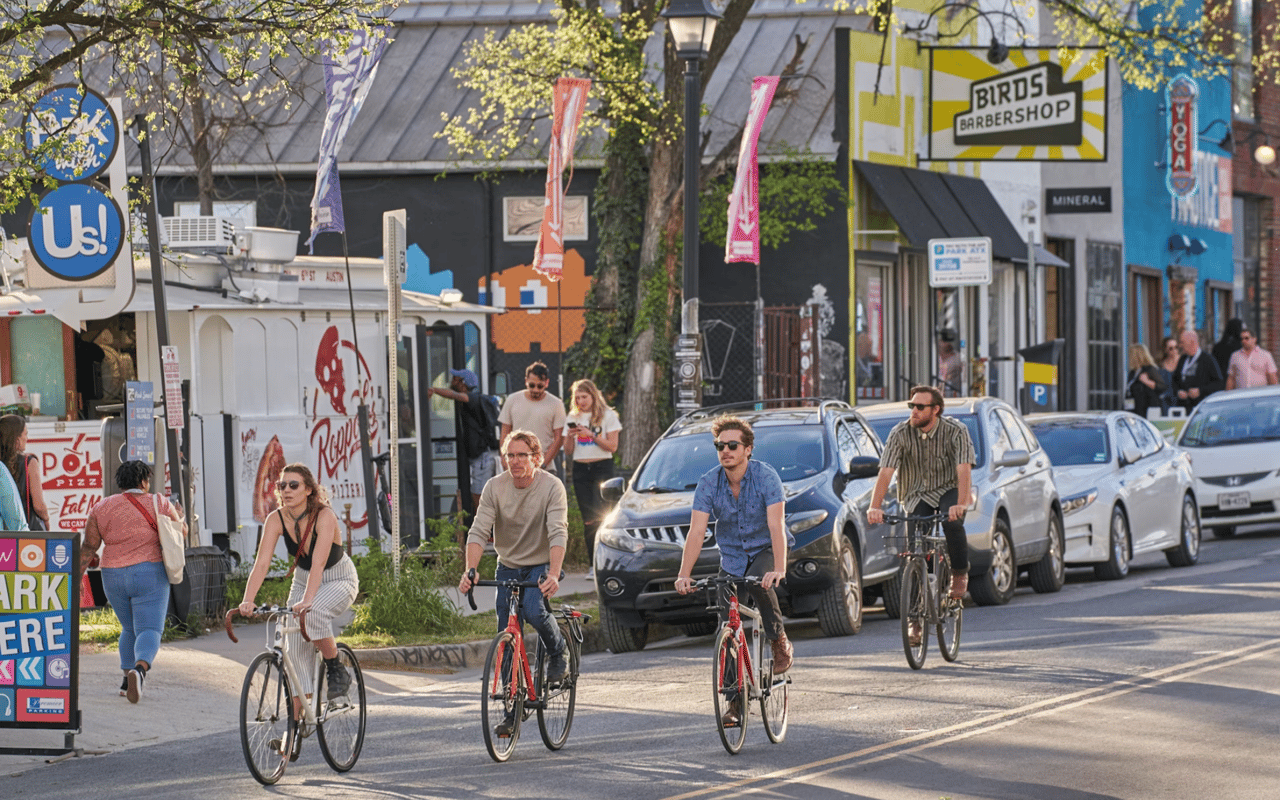
Why Austin Still Feels Like a Big Small Town, Even as It Grows
Austin, TX ranked the 12th largest city in the United States as of the Census Bureau's 2025 population estimates, yet neighborhoods like Hyde Park, Clarksville, and Bouldin Creek still function like independent villages, with residents spending most of their time within a few-mile radius.
Element | Example | Why It Preserves Small-Town Feel |
|---|---|---|
Historic neighborhoods | Hyde Park, Clarksville, Bouldin Creek | Walkable streets and longtime local businesses |
Community gathering spaces | Zilker Park, Lady Bird Lake Trail | Shared, unplanned interactions among residents |
Grassroots events | Blues on the Green, Trail of Lights, Pecan Street Festival | Treated as annual local rituals, not tourist draws |
Development pattern | Adaptive reuse and infill housing | New construction layers around existing character |
Trying to find a neighborhood that fits this feel? Compare family-friendly Austin neighborhoods or reach out to Jenny Dicker to talk through which area matches your daily routine.
Austin's skyline may be reaching new heights in 2026, but the city's heartbeat remains rooted in the tight-knit spirit of its historic neighborhoods. For many of our clients, the allure of living in Austin, TX is the ability to enjoy the economic engine of a tech powerhouse while still bumping into neighbors at the local coffee shop.
Even as Austin has grown into the 12th largest city in the nation, per the Census Bureau's most recent estimates, the "small town" feel is preserved through intentional community spaces and a fierce loyalty to independent businesses.
City population ranking per U.S. Census Bureau Vintage 2025 subcounty population estimates, released May 2026.
Neighborhoods That Still Operate Like Small Communities
Why Neighborhood Identity Persists
- Hyde Park: Front-porch culture and walkable streets.
- Clarksville: Longtime homes mixed with local restaurants.
- Bouldin Creek: Tight-knit blocks and familiar faces.
Outdoor Spaces Act as Community Gathering Points
Spaces That Foster Connection
- Zilker Park: Group picnics and casual meetups.
- Lady Bird Lake Trail: Daily walkers and runners cross paths.
- Neighborhood greenbelts: Unplanned conversations happen naturally.
Curious how job growth and neighborhood character intersect? Read what makes Austin a burgeoning tech hub or how Austin matches the life our clients want to live.
Events That Haven't Lost Their Local Feel
Events That Define the Calendar
- Blues on the Green: Blankets, dogs, and familiar faces.
- Trail of Lights: Family traditions continue year after year.
- Pecan Street Festival: Local artists remain the focus.
Local Businesses Still Anchor Daily Life
Places Residents Rely On
- Local coffee shops: Morning routines feel communal.
- Neighborhood markets: Regular interactions build familiarity.
- Independent restaurants: Owners are often present on-site.
Development That Layers Instead of Replaces
How Growth Is Integrated
- Adaptive reuse: Old structures find new purposes.
- Infill housing: Scale respects surrounding streets.
- Mixed-use zones: Daily needs stay close to home.
Real Estate Reflects Human-Scale Living
Features Buyers Value
- Front porches: Encourage interaction.
- Tree-lined streets: Calm traffic flow.
- Local access: Daily errands stay nearby.
Longtime Residents Still Shape the Culture
How Culture Is Passed Along
- Neighborhood associations: Preserve local norms.
- Volunteer groups: Maintain parks and trails.
- Local schools of thought: Shared values guide growth conversations.
Why Newcomers Integrate Quickly
Factors That Ease Integration
- Shared public spaces: Easy entry points.
- Informal social norms: Conversations start easily.
- Neighborhood-scale living: Smaller circles form naturally.
Growth Without Losing Identity
Why the Balance Works
- Strong neighborhood cores: Resist homogenization.
- Cultural continuity: Traditions persist.
- Intentional planning: Growth follows established rhythms.
Frequently Asked Questions
Does Austin still feel local despite growth?
Yes. Even as Austin has climbed to the 12th largest city in the U.S., neighborhoods and daily routines maintain a personal, small-town feel through walkable streets and long-running local businesses.
Are newer areas as connected as older ones?
Many newer developments are designed with walkability and shared public spaces in mind, though the sense of familiarity tends to build over time the way it has in older neighborhoods like Hyde Park and Clarksville.
Is community important to Austin buyers?
Very much so. Buyers often prioritize walkability, tree-lined streets, and proximity to daily errands over sheer square footage, and lifestyle fit frequently drives purchase decisions as much as price.
About the Dicker Morin Group
Jenny Dicker and Lana Morin Pierce are Accredited Luxury Home Specialists with the Dicker Morin Group at Douglas Elliman Real Estate, based at 1717 W 6th Street, Suite 190, Austin, TX 78703. Together they bring a combined 25 years of negotiation experience to buyers and sellers across the greater Austin area, with a focus on luxury property marketing since forming their partnership in 2021. Meet the full Dicker Morin Group team.
Contact Dicker Morin Group Today
Reach out to us at Dicker Morin Group to talk about living in Austin, TX and how different neighborhoods support different lifestyles. We help buyers and sellers navigate this evolving market while staying rooted in what makes Austin feel like home.