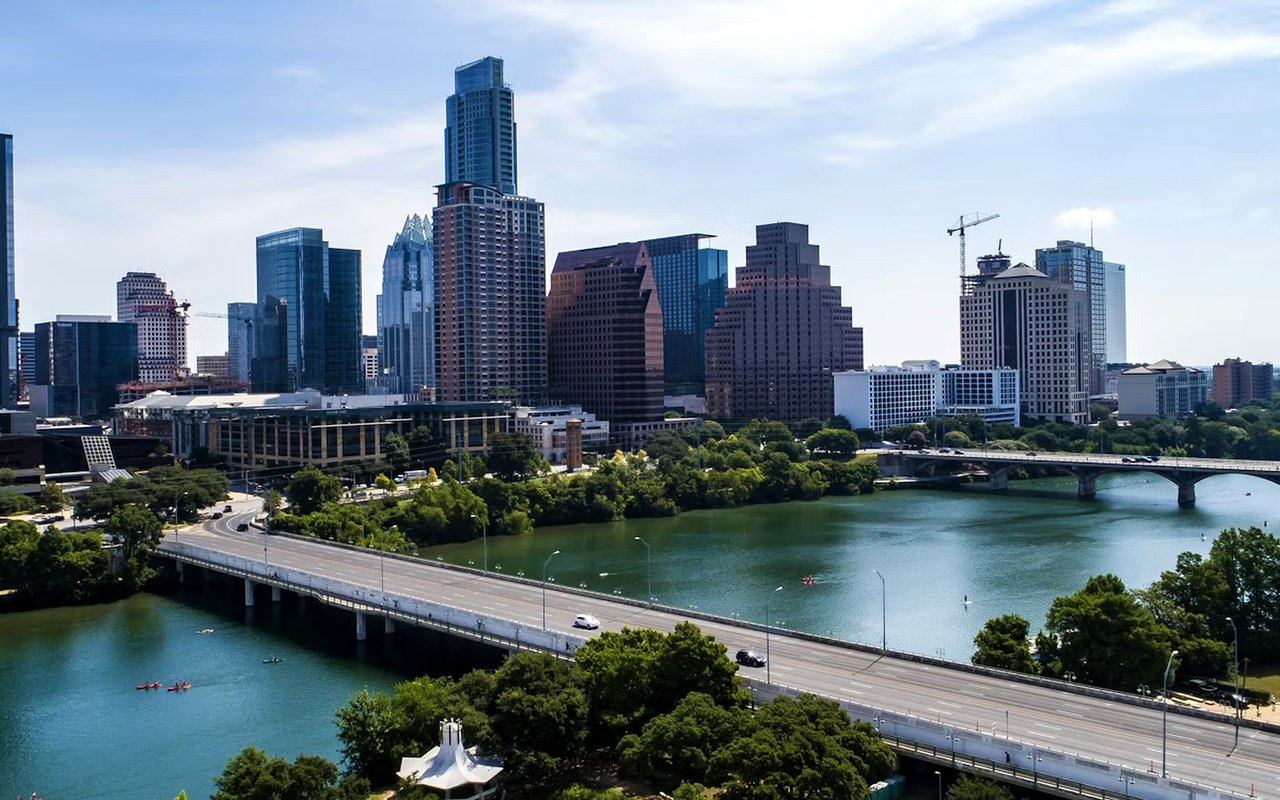
Over the past decade, the migration of Bay Area residents to Austin, Texas, has shifted from a pandemic-era trend to a durable demographic and economic pattern. In 2026, that movement shows no signs of slowing. From favorable tax conditions to a rapidly expanding housing inventory and a flourishing tech ecosystem, Austin continues to offer a compelling value proposition—particularly for high-earning professionals, founders, and remote workers seeking relief from California's mounting costs and regulatory fatigue.
While Austin's growth has come with its own trade-offs, the city's pro-growth stance and quality-of-life advantages continue to resonate with former Californians.
Sizable Financial Advantages
The foundation of the Austin appeal begins with financial relief. For many Bay Area transplants, the difference is immediately felt. While Austin's home prices have increased over the past five years, the gap between Austin and San Francisco remains substantial.
As of Q1 2026, median home prices in Travis County hover just under $475,000, compared to $1.35 million in San Francisco proper. That delta allows many families relocating from the Bay Area to either purchase larger homes or shift to single-income lifestyles while maintaining long-term financial flexibility.
The tax implications are even more striking. Texas has no state income tax, whereas California's top marginal rate remains 13.3%, and additional proposals, including the 2026 " Billionaire Tax Act," are pushing high earners to reassess their residency. For business owners and ultra-high-net-worth individuals, the annual savings are exponentially higher, which is why Texas remains a favored destination for asset protection and wealth preservation.
This difference creates a kind of psychological edge as well, with Bay Area transplants often describing the move as a "weight lifted," citing greater breathing room, lower monthly overhead, and the ability to reinvest in personal or business pursuits.
As of Q1 2026, median home prices in Travis County hover just under $475,000, compared to $1.35 million in San Francisco proper. That delta allows many families relocating from the Bay Area to either purchase larger homes or shift to single-income lifestyles while maintaining long-term financial flexibility.
The tax implications are even more striking. Texas has no state income tax, whereas California's top marginal rate remains 13.3%, and additional proposals, including the 2026 " Billionaire Tax Act," are pushing high earners to reassess their residency. For business owners and ultra-high-net-worth individuals, the annual savings are exponentially higher, which is why Texas remains a favored destination for asset protection and wealth preservation.
This difference creates a kind of psychological edge as well, with Bay Area transplants often describing the move as a "weight lifted," citing greater breathing room, lower monthly overhead, and the ability to reinvest in personal or business pursuits.
A Housing Market That Welcomes Growth
Unlike California's highly regulated, land-constrained housing environment, Austin has embraced growth. In early 2026, Austin reported four months of housing inventory, effectively a buyer's market. By contrast, the national average hovers around five months, and many West Coast metros are still facing chronic undersupply.
Austin currently ranks #2 nationally for new housing units per 1,000 existing homes, helping stabilize rents and expand purchase options across price tiers. Notably, the city has achieved this without relying on rent control mandates. This approach has allowed developers to remain active while preserving rental affordability through market supply rather than regulation.
The result is a healthier path to ownership—particularly for younger professionals and families priced out of California's starter home market.
Austin currently ranks #2 nationally for new housing units per 1,000 existing homes, helping stabilize rents and expand purchase options across price tiers. Notably, the city has achieved this without relying on rent control mandates. This approach has allowed developers to remain active while preserving rental affordability through market supply rather than regulation.
The result is a healthier path to ownership—particularly for younger professionals and families priced out of California's starter home market.
A Still Evolving Tech Footprint
What began as a cost-saving expansion strategy for California companies has evolved into something more permanent. Austin is no longer just a satellite office for Big Tech—it's a core operating hub.
Tesla's Gigafactory Texas now supports over 20,000 jobs in the metro area. Samsung's $17 billion semiconductor facility northeast of the city has catalyzed a robust manufacturing and engineering workforce. Apple's massive campus in North Austin continues to grow, and Google, Meta, and Oracle all maintain significant office footprints.
Crucially, Austin's tech sector is maturing beyond the megacorporations, and continues to rank near the top amongst US cities for GDP growth. The city's rise has supported a thriving startup ecosystem that not only competes with but also outpaces the Bay Area.
Founders, engineers, and product teams are increasingly choosing to build in Austin not just because it's cheaper, but because the ecosystem now offers serious depth in talent, capital, and mentorship. Venture capital remains active, and with Austin hosting anchor institutions like Capital Factory and South by Southwest Innovation Conference and Festivals, the city is firmly on the global innovation map.
Tesla's Gigafactory Texas now supports over 20,000 jobs in the metro area. Samsung's $17 billion semiconductor facility northeast of the city has catalyzed a robust manufacturing and engineering workforce. Apple's massive campus in North Austin continues to grow, and Google, Meta, and Oracle all maintain significant office footprints.
Crucially, Austin's tech sector is maturing beyond the megacorporations, and continues to rank near the top amongst US cities for GDP growth. The city's rise has supported a thriving startup ecosystem that not only competes with but also outpaces the Bay Area.
Founders, engineers, and product teams are increasingly choosing to build in Austin not just because it's cheaper, but because the ecosystem now offers serious depth in talent, capital, and mentorship. Venture capital remains active, and with Austin hosting anchor institutions like Capital Factory and South by Southwest Innovation Conference and Festivals, the city is firmly on the global innovation map.
A Quality of Life That's Hard to Replicate
For many Bay Area transplants, the decision to move is both economic and emotional. Austin offers an impressive collection of neighborhoods, ranging from urban to suburban to rural.
While San Francisco continues to grapple with downtown vacancy, storefront closures, and safety concerns, Austin's core neighborhoods and outlying communities remain full of life. From live music along South Congress and Red River to walkable restaurant rows in East Austin, the city encourages participation. It feels active rather than reactive, which is often a vital distinction for those in search of social energy and cultural presence.
But what often seals the deal is the city's tone. Austin blends big-city infrastructure with small-town warmth, pairing professional ambition with a unique, disarmingly casual attitude. The result is a relaxed yet capable social dynamic that draws not only families and tech professionals but also creatives, hospitality entrepreneurs, and influencers seeking a lifestyle and livability.
Combine that with top-rated schools in suburbs like Bee Cave, Dripping Springs, and Westlake expanding airport, year-round festivals, and easy access to the outdoor pursuits of Texas Hill Country (and, at 9 million acres, the second largest wine region in the US). It's easy to plug into the region's myriad lifestyle offerings.
While San Francisco continues to grapple with downtown vacancy, storefront closures, and safety concerns, Austin's core neighborhoods and outlying communities remain full of life. From live music along South Congress and Red River to walkable restaurant rows in East Austin, the city encourages participation. It feels active rather than reactive, which is often a vital distinction for those in search of social energy and cultural presence.
But what often seals the deal is the city's tone. Austin blends big-city infrastructure with small-town warmth, pairing professional ambition with a unique, disarmingly casual attitude. The result is a relaxed yet capable social dynamic that draws not only families and tech professionals but also creatives, hospitality entrepreneurs, and influencers seeking a lifestyle and livability.
Combine that with top-rated schools in suburbs like Bee Cave, Dripping Springs, and Westlake expanding airport, year-round festivals, and easy access to the outdoor pursuits of Texas Hill Country (and, at 9 million acres, the second largest wine region in the US). It's easy to plug into the region's myriad lifestyle offerings.
Discover Austin Luxury with a Trusted Real Estate Partner
For Bay Area residents feeling squeezed, financially, professionally, or culturally, Austin continues to offer a genuine outlet filled with serious opportunity, deepening identity, and long-term upside.
With a pro-growth mindset, strong infrastructure, and a lifestyle that balances ambition with authenticity, Austin has successfully positioned itself not as "the next Silicon Valley," but as the first Silicon Hills.
If you're considering where to plant roots, raise a family, or scale a business, and want to discover more about Austin and the luxury lifestyle that awaits you in Central Texas, contact The Dicker Morin Group today to start your real estate journey.
With a pro-growth mindset, strong infrastructure, and a lifestyle that balances ambition with authenticity, Austin has successfully positioned itself not as "the next Silicon Valley," but as the first Silicon Hills.
If you're considering where to plant roots, raise a family, or scale a business, and want to discover more about Austin and the luxury lifestyle that awaits you in Central Texas, contact The Dicker Morin Group today to start your real estate journey.