Home to four of the ten most populous cities in the country, Texas' collection of major metropolitan areas is unmatched in the US (by comparison, California has only two). Each boasting its own economic strengths and cultural identity, from Houston's role as an industrial hub along the Gulf Coast to Dallas' affluence as destination for corporate headquarters and from Fort Worth's cowtown vibes and position as an aviation and defense hotspot to San Antonio's deep heritage and tradition, and strong military presence, they collectively are showcase of Texas' global influence.
For its part, Austin, the country's 12th largest city, shares some similarities with those four.
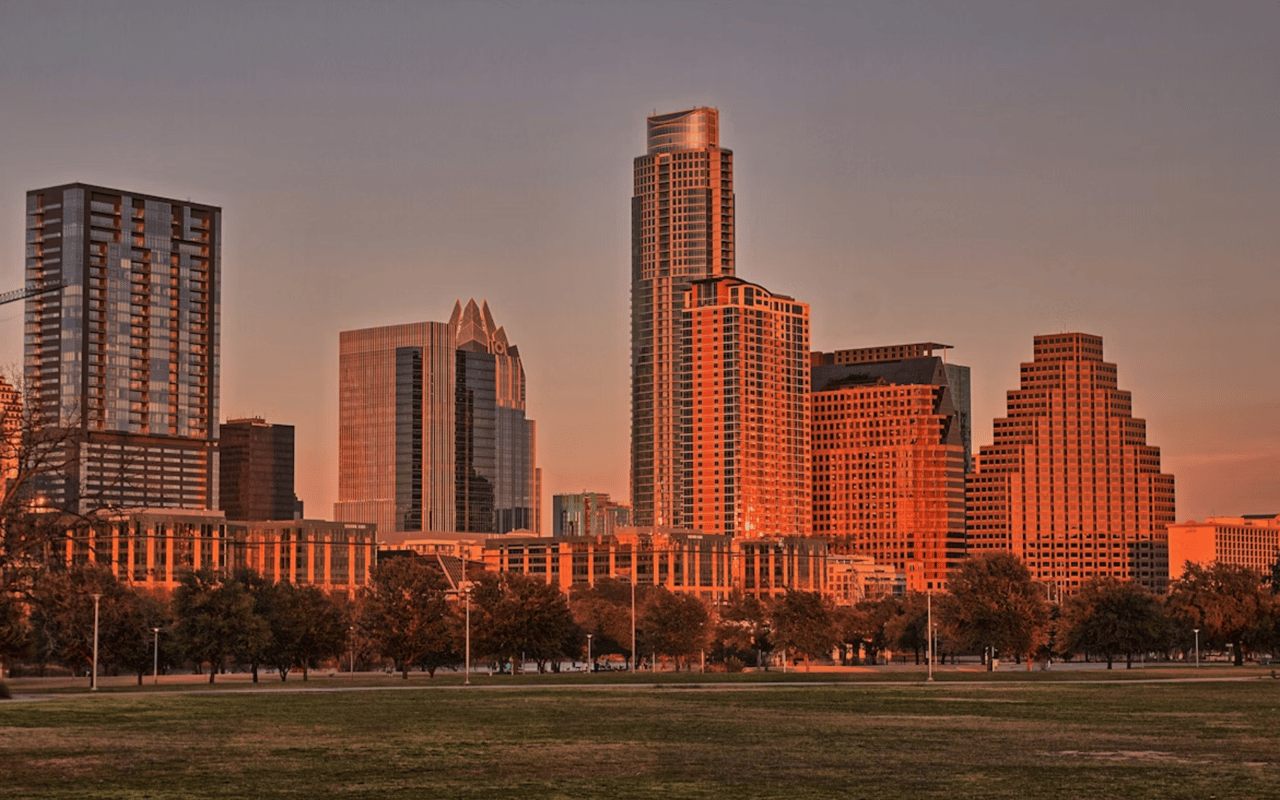
It possesses the glass-and-steel downtown that the others do, and it's far from a political or economic slouch, hosting both the state capital and a technology sector that rivals California's Silicon Valley, with companies such as Dell, Oracle, and Tesla headquartered here.
But spend any amount of time in Austin, and you quickly realize it's a far cry from its in-state siblings, both culturally and aesthetically.
We often find that with many relocating buyers, the difference is difficult to define at first. As with everything else in the Lone Star State, Austin is big, a sprawling footprint that covers more than 330 square miles.
But the manner in which the city is laid out, with natural boundaries, not artificial ones, defining the city's numerous neighborhoods, and a collective mindset that aims to elevate the city and its surrounding communities as a whole, instead of as segmented cogs, blankets the region with a charming, village-like atmosphere that's nearly impossible to recreate elsewhere.
The city as a whole is less formal, more participatory, and often more flexible in how people live and work.
Over time, such distinctions shape not only how the city feels, but how residents experience their daily lives.
A Culture That Feels Less Structured
One of the first things people notice about Austin is how informal it feels compared to other major Texas cities.
In markets like Dallas, there is often a clearer sense of structure around business, social settings, and even how the city presents itself. Houston, while more expansive and diverse, can still feel driven by industry and scale.
Austin takes a different approach.
The city's culture tends to blur traditional boundaries between professional and personal environments. It's not unusual to see founders, engineers, creatives, and entrepreneurs sharing the same spaces, dressed similarly, and interacting without much hierarchy.
For many relocating buyers, this shift feels immediate. Meetings feel less rigid. Social environments feel more accessible. There is a sense that participation matters more than presentation.
That informality doesn't signal a lack of ambition. After all, companies such as Amazon, Apple, and Samsung all have a major presence here, and along with the state's flagship University of Texas-Austin, there's no lack of aspiration or upward mobility. Instead, its more unshakable confidence and less unyielding uniformity.
A Social Scene That Feels Easy to Access
Austin's social environment also contributes to its distinct identity.
In larger or more structured cities, social life can require planning. Reservations, logistics, and coordination often shape how and when people spend time together.
Austin tends to feel more flexible.
Neighborhood restaurants, outdoor patios, and live music venues create an environment where plans can come together more naturally. It's common for a casual dinner to turn into a longer evening, or for a quick outing to evolve into a full night without much effort.
There is also a noticeable mix of people across industries and backgrounds. Technology professionals, creatives, students, and entrepreneurs all contribute to a social scene that feels varied but connected.
For many residents, this accessibility becomes one of the most enjoyable aspects of living in the city.
Geography That Alters the Experience
Austin's physical landscape plays a significant role in how it differs from other Texas metros.
While much of Texas is known for its flat terrain and expansive development patterns, Austin sits at the edge of the Hill Country. The result is a landscape that includes rolling hills, lakes, and green spaces woven throughout the metro area.
This geography influences daily life in practical ways.
Water access along Lady Bird Lake creates opportunities for walking, running, and kayaking close to the city center. The Barton Creek Greenbelt offers natural spaces that feel removed from urban activity, despite being just minutes from central neighborhoods.
Need to "escape" the city? Lake Travis and Texas Hill Country, including the state's celebrated Wine Country, aren't even one-tank getaways; they're daytrips that offer nearby reprieves that can prove difficult to experience in other parts of the state.
For buyers relocating from other parts of Texas, the environment is a revelation. The presence of elevation, water, and greenery adds variety to both neighborhoods and daily routines.
It's not simply a visual difference. It changes how residents use their time.
Music and Cultural Events as Part of Everyday Life
Austin's identity is closely tied to its role as a cultural center, particularly in music.
The city's designation as the "Live Music Capital of the World" is reflected not just in large events, but in everyday experiences. Live performances take place across the city on any given night, from small venues to established stages.
Major events such as South by Southwest (SXSW) and Austin City Limits (ACL) bring global attention to Austin each year, drawing professionals and creatives from around the world. These gatherings highlight the city's ability to integrate music, film, and technology in a way that feels cohesive rather than segmented.
What stands out, however, is how accessible these experiences remain outside of major festivals.
Residents don't need to plan extensively to engage with the city's cultural offerings. Music, dining, and local events are part of what propels the city's spirit and soul, and not occasionally, but daily.
A Different Kind of Energy
If we had one word to describe Austin's unique energy, it would be engagement.
Compared to other Texas cities, Austin has a far more participatory lifestyle than Houston or Dallas. People engage with their surroundings rather than simply moving through them. There is a sense of experimentation, whether in business, design, or lifestyle choices.
Local businesses maintain a strong presence, contributing to neighborhoods that feel distinct and organic rather than uniform. New ideas are met with curiosity rather than resistance. The city's growth, while significant, has not fully erased its original character.
For relocating buyers, this energy can be one of the most compelling aspects of Austin. It creates a sense that the city is still evolving, still open, and still shaped by the people who choose to live there. Even in the face of unprecedented change, it remains authentic.
Discover Your Authentic Austin Vibe with the Dicker Moran Group
For those considering a move within Texas or from out of state, Austin offers something that is not always easy to quantify.
It combines economic opportunity with a lifestyle that feels less constrained. It provides access to culture, outdoor activity, and professional growth without requiring the same level of structure or formality found in other major cities.
That balance is what often sets Austin apart.
While Dallas-Fort Worth, Houston, and San Antonio each offer their own advantages, Austin presents a different kind of experience, one that prioritizes flexibility, accessibility, and a more relaxed approach to daily life.
For many buyers, that difference is exactly what they have been looking for, and if you're considering a move, contact The Dicker Morin Group today to start your real estate journey. We will help you navigate the possibilities that Austin presents and define what you value, whether it's walkability, schools, views, privacy, proximity to the airport, the energy of downtown, or the serenity of suburban livability, and match that to neighborhoods and home types that fit.