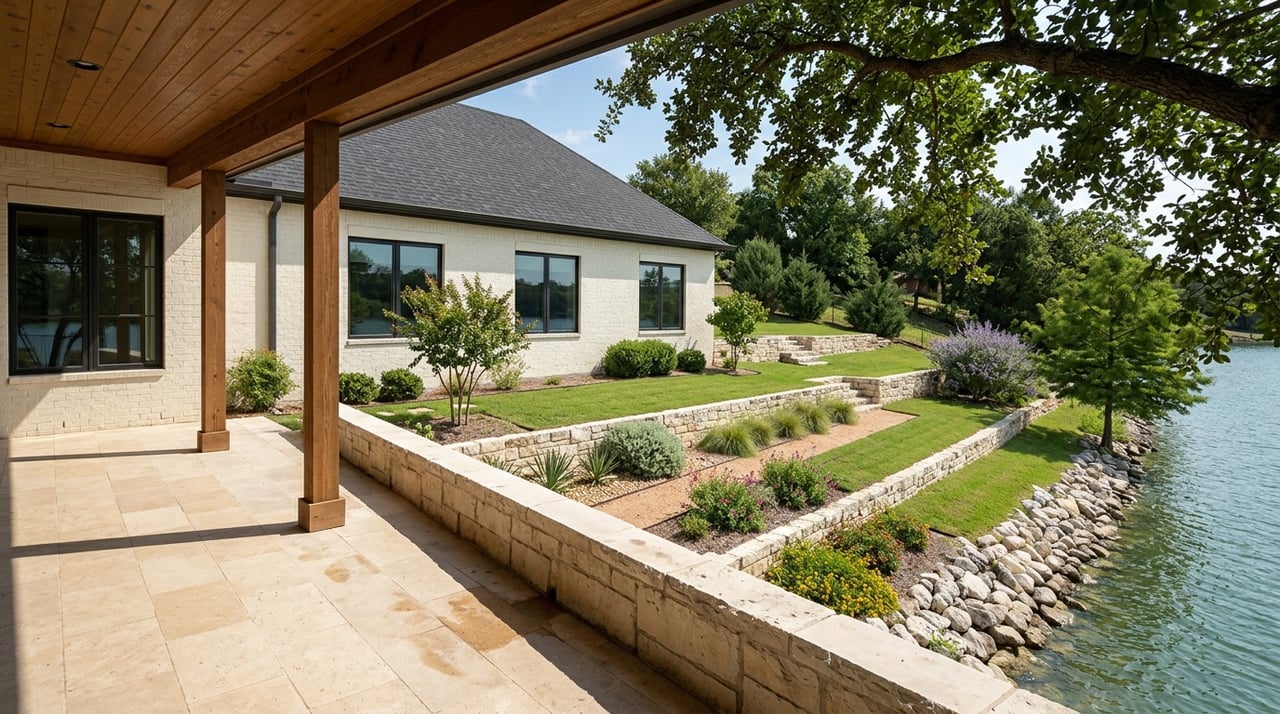
Choosing between a waterfront home and a hilltop home on Lake Travis is not just about price or style. It is about how you want to live, what kind of daily experience matters most to you, and how the property will function over time. If you are weighing direct lake access against panoramic Hill Country views, this guide will help you compare the tradeoffs with confidence. Let’s dive in.
Lake Travis living starts with the lake itself
Lake Travis is a reservoir on the Colorado River northwest of Austin, and its physical character shapes every home search in the area. Texas Parks and Wildlife lists the lake at 18,622 acres, with a maximum depth of 190 feet and a conservation pool elevation of 681 feet msl.
Just as important, Lake Travis fluctuates significantly. That means the waterfront versus hilltop decision is not only about scenery. It is also about how you plan to use the property, how much hands-on maintenance you want, and how the lot performs when lake levels change.
In the broader Lakeway and Lake Travis corridor, many buyers compare both property types during the same search. Lakeway describes the area as a resort community with marinas, parks, trails, and lake-oriented recreation about 25 miles west of downtown Austin, which helps explain why both waterfront and view-oriented homes attract strong interest.
Waterfront homes offer direct lake access
If your dream includes stepping outside to enjoy boating, paddling, swimming, fishing, or dock access, waterfront living is the most direct path to that lifestyle. On Lake Travis, the appeal is easy to understand. The lake is a recreation-driven amenity, and waterfront ownership puts that experience right outside your door.
For many buyers, that daily convenience is the biggest selling point. You are not just buying a house. You are buying closer access to the lake lifestyle that defines this part of the Hill Country.
Waterfront use can change with lake levels
This is one of the most important realities to understand before you buy. The Lower Colorado River Authority says Lake Travis is a water-supply reservoir designed to fluctuate, and public boat ramps may become unusable when levels are too low or during flood conditions.
That same principle affects private waterfront living. A home can be on the water, but your ability to launch a boat or enjoy certain shoreline conditions may vary depending on the lake level. In other words, waterfront does not always mean the same thing every day of the year.
A dock is not automatic
Many buyers assume a lakefront property comes with a guaranteed right to build a dock. On Lake Travis, that is not the case. LCRA states that owning lakefront property does not by itself entitle a property owner to build a dock.
Docks must meet LCRA safety standards, and some shoreline areas may not be suitable because of shallow water, narrow coves, rocky terrain, or other hazards. If a dock matters to you, this should be one of the first due diligence questions you ask for any waterfront property.
Hilltop homes prioritize views and privacy
If your ideal home is more about broad vistas, peaceful surroundings, and a strong connection to the Hill Country landscape, a hilltop home may be the better fit. In the Lake Travis area, elevated homes often trade immediate water access for sweeping views, greater separation from shoreline activity, and a quieter feel.
That preference is reflected in local design guidance. In Lakecliff on Lake Travis, design rules encourage homes to respond to topography, trees, views, and solar angles while blending with the Hill Country setting.
The terrain shapes the experience
Texas Parks and Wildlife describes Lake Travis as a highland reservoir dominated by rocky banks and steep cliffs. That helps explain why elevation can be such a valuable feature in this market.
A hilltop lot can create opportunities for view corridors, outdoor entertaining, and more privacy depending on the site layout. At the same time, not every elevated property offers the same experience, so lot placement and orientation matter just as much as the fact that the home sits above the lake.
Outdoor living is often a major advantage
Many hilltop homes lean heavily into outdoor spaces. Lakecliff’s design standards highlight semi-enclosed courtyards, outdoor living areas, native stone, and natural colors that fit the Hill Country setting.
Lakeway’s landscape code also emphasizes water-efficient landscape planning. For buyers who want a strong indoor-outdoor lifestyle without shoreline management, this can be a very appealing middle ground.
Maintenance looks different for each option
Every luxury home has upkeep, but the work often shows up in different places depending on whether you buy waterfront or hilltop.
Waterfront maintenance is more shoreline-specific
Waterfront homes often require more site-specific planning and maintenance because the shoreline is exposed to wind, wakes, current, and changing lake levels. LCRA says dock owners are responsible for maintaining their docks, and shoreline debris is generally the responsibility of the owner or association because most shoreline and lakebed land is privately owned.
For some buyers, that responsibility is well worth it. For others, it becomes a reason to look higher up the slope where the lifestyle can feel simpler to manage.
Hilltop maintenance often centers on the site
With hilltop homes, the focus often shifts to landscaping, grading, and exterior review. In some Lake Travis communities, architectural committees review not only the home itself but also landscaping, driveways, walls, gates, and fences.
Lakecliff’s rules favor native materials, muted colors, and designs that blend into the environment. If you love polished outdoor spaces and thoughtful site design, this may feel like a natural fit. If you want a property with fewer review layers, it is smart to understand community standards before making an offer.
Permits and flood questions are property-specific
Whether you are buying on the shoreline or above it, lot-specific review matters. LCRA says land-disturbing activity within the Lake Travis watershed in Travis County may require LCRA authorization.
Travis County also notes that its floodplain jurisdiction applies only in unincorporated areas outside city limits. The key takeaway is simple: do not assume two nearby homes will have the same development or permitting path.
Flood questions are also specific to the property, not just the home type. A waterfront address can raise obvious questions, but elevated homes are not automatically free from flood-related review. The right approach is to verify the details for the exact lot you are considering.
Resale value depends on different strengths
Both waterfront and hilltop homes can be highly desirable on Lake Travis, but buyers tend to value them for different reasons.
What drives waterfront appeal
Waterfront resale often depends on usable frontage, dockability, cove protection, and how the property performs as lake levels rise and fall. Because not every shoreline segment supports the same kind of lake use, waterfront homes can be a more specialized product.
That specialization can still be a major advantage. Buyers who want direct access to the water are often highly motivated, but they also tend to pay close attention to practical details that affect usability.
What drives hilltop appeal
Hilltop resale often leans on views, privacy, outdoor living space, and how easy the home feels on a day-to-day basis. For buyers who want a Lake Travis address and the Hill Country setting without dock management or shoreline upkeep, hilltop homes can check many of the right boxes.
A well-sited hilltop home may also appeal to buyers who entertain often or want a strong lock-and-leave lifestyle. In many cases, the value story is less about direct water access and more about the overall living experience.
Which home type fits your lifestyle?
If you are deciding between the two, it helps to think beyond the listing photos. Start with how you expect to use the home most weeks, not just on your best weekends.
A waterfront home may be the better match if you want:
- Direct access to boating, paddling, or fishing
- The closest possible connection to the lake
- A property where shoreline use is a major priority
- A specialized lifestyle home with strong recreation appeal
A hilltop home may be the better match if you want:
- Expansive views and a quieter setting
- More separation from shoreline activity
- Outdoor living focused on patios, courtyards, and entertaining
- A Lake Travis lifestyle without dock and shoreline responsibilities
One more detail buyers should verify
For buyers who are also comparing homes based on school attendance, exact address verification matters. Lake Travis Independent School District says elementary and middle school attendance zones are mapped by street detail, and the district is currently a single high-school district.
That means school assignment is not determined by whether a home is waterfront or hilltop. It comes down to the property’s specific location.
In the end, the best choice is the one that matches how you want to live on Lake Travis. If you want help weighing waterfront access, views, lot usability, and long-term resale, the Dicker Morin Group offers boutique guidance rooted in deep local knowledge of Lake Travis and Hill Country living.
FAQs
What is the main difference between Lake Travis waterfront and hilltop homes?
- Waterfront homes focus on direct lake access and recreation, while hilltop homes usually focus on views, privacy, and site design.
Can you build a dock on any Lake Travis waterfront property?
- No. LCRA says lakefront ownership alone does not automatically give you the right to build a dock, and docks must meet safety standards.
Do Lake Travis water levels affect waterfront living?
- Yes. Lake Travis is designed to fluctuate, which can affect shoreline conditions and access to boating amenities.
Are hilltop homes on Lake Travis always more private?
- No. Privacy depends on the lot layout, screening, community rules, and traffic patterns, not just elevation.
Do both waterfront and hilltop homes need permit review in Travis County?
- They can. LCRA says some land-disturbing activity in the Lake Travis watershed in Travis County may require authorization, and review depends on the specific property.
Does school zoning in the Lake Travis area depend on whether a home is waterfront or hilltop?
- No. LTISD says attendance zones are mapped by street detail, so you should verify the exact address rather than assume based on home type alone.