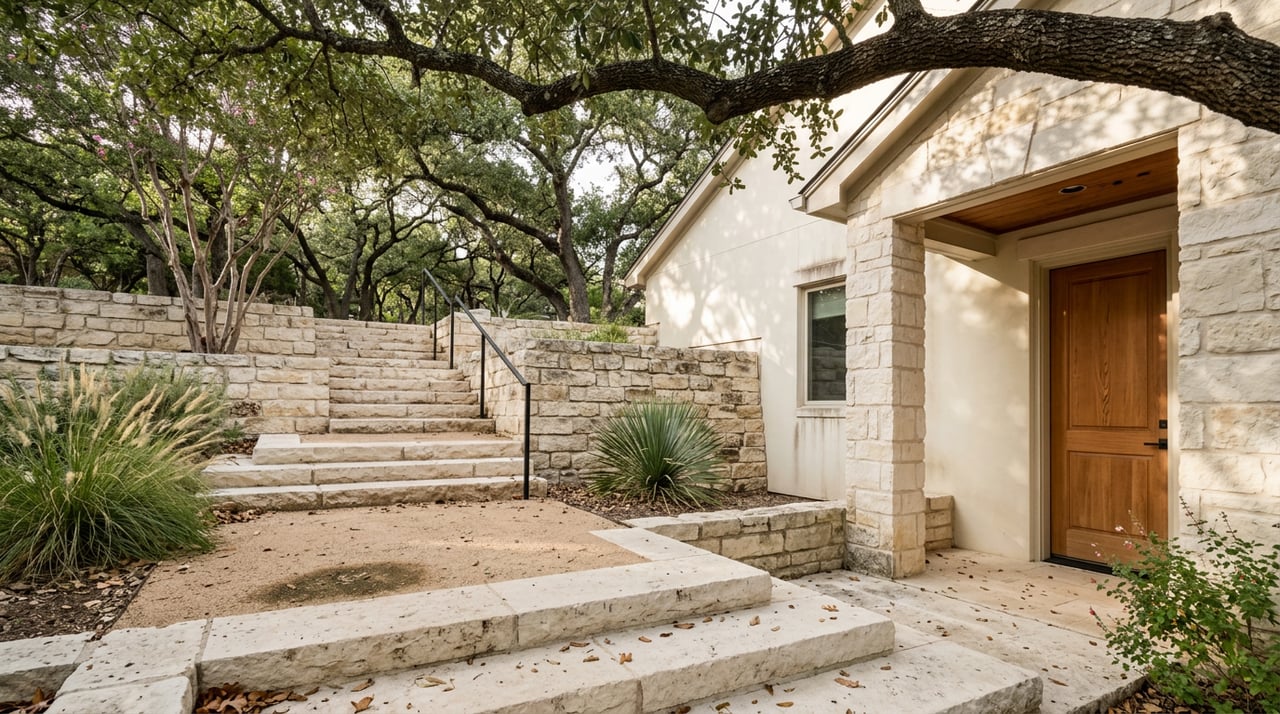
Ask a longtime West Lake Hills resident where they went for a proper glass of wine on a Tuesday night last year, and the honest answer usually involved crossing the river. The neighborhood has long been strong on groceries, pediatricians, and drop-off lines, and short on anywhere to linger after 6 p.m. That gap is beginning to close this month, with new dining options adding places to linger after 6 p.m.
The claim worth sitting with: Bee Cave Road is seeing new businesses and transportation projects this year. A wine café is opening, a road project is widening its shoulders, and a trail study is getting funded. Together, they offer a snapshot of change along the corridor.
The Wine Café Coming to Westlake
Postino WineCafe is opening its third Austin location at the Village at Westlake, at 701 S. Capital of Texas Hwy., Suite J760, this August. The Arizona-based chain already runs locations in Zilker and Bryker Woods, and its arrival in West Lake Hills adds another dining option to the corridor.
Postino co-founder and CEO Lauren Bailey put it plainly in a statement:
"Westlake is one of Austin's most established and community-driven neighborhoods, which made it a natural next step for us."
The statement describes Westlake as established and community-driven. It does not say why the company chose the location. The menu is built around bruschetta boards, paninis, and a wine list meant for slow evenings, exactly the kind of stop that didn't exist within the Village before. Grocery runs, banking, and pharmacy trips have anchored that shopping center for years. A wine café is a different kind of tenant.
A Taco Shop Along the Same Corridor
Taqueria de Diez opened its third location in West Lake Hills this spring. The chain started downtown in 2024 and runs an open kitchen, so food prep happens in view of the dining room.
Two chains are bringing new locations to the same half-mile stretch of Bee Cave Road this year. Their arrivals add two dining options to the corridor.
The RM 2244 Project Along Bee Cave Road
The road project is another change along the corridor. TxDOT's own project page for the RM 2244 (Bee Cave Road) improvement project lays out the math:
- Bee Cave Road was originally built in 1956.
- Average daily traffic currently runs around 25,000 vehicles.
- That number is projected to reach 33,400 within the next decade.
- The $29 million project, under contractor Aaron Concrete Contractors, is adding a center turn lane, shoulders, and sidewalks along the three-mile stretch between Redbud Trail and Walsh Tarlton Lane, converting the road from four lanes to five.
The figures describe a heavily used corridor, with daily traffic projected to rise over the next decade.
Why the City Is Studying a Trail Along Bee Cave Road
A separate transportation story emerged last month. On July 24, West Lake Hills entered an interlocal agreement with CAMPO to study a new transportation trail along or near Eanes Creek, running parallel to Bee Cave Road between Loop 360 and MoPac. The project carries a total cost of $520,000, with CAMPO covering $416,000, or 80%, and the city covering the remaining $104,000. The agreement runs through September 30, 2027.
The stated goal is a safer, more comfortable route for people who currently have no option but to drive or walk the shoulder of a road built in 1956. If the study moves forward, residents could have another route to reach the Village at Westlake, Postino, or Taqueria de Diez. It's a small, unglamorous line item in a city budget, and the study would examine an alternative route along a corridor with limited capacity.
The Week School Starts Changes the Math Again
Layer one more thing onto the corridor calendar: Westlake High School's first day of the 2026-27 school year is August 13, per the Eanes ISD calendar. Drop-off and pickup lines along Bee Caves Road and the streets feeding into Eanes campuses will shift back into their fall pattern within days.
The summer camp season that has kept Westlake Athletic & Community Center busy is also winding down. The most recent Nike Basketball Camp session there ran August 3 through 7, one of the last full-week programs before the district's academic calendar takes over the neighborhood's rhythm again. For a few weeks in mid-August, the corridor carries both tail-end summer traffic and the start of the school year at the same time, which is worth knowing if you're timing a grocery run or trying to catch dinner at one of the new spots before 6 p.m. gets busy.
Changes Along the Corridor
Put the pieces together and the story isn't "West Lake Hills is booming." The examples here are a restaurant opening, a taco shop, the CAMPO trail study, and the RM 2244 project. They show changes in local businesses and transportation planning along a corridor that includes Westlake High School, Hill Country Middle School, and offices along Bee Caves Road.
If you've lived here for a while, that's the useful thing to know walking into fall: a wine café and taco spot are arriving, and a proposed trail remains under study. They mark changes along a corridor that has served the neighborhood for years.
For residents thinking about what any of this means for the value of a home they already own along the corridor, or simply want a local read on how West Lake Hills is evolving, Dicker Morin Group lives and works in this market every day. Book a consultation whenever you're ready to talk it through.