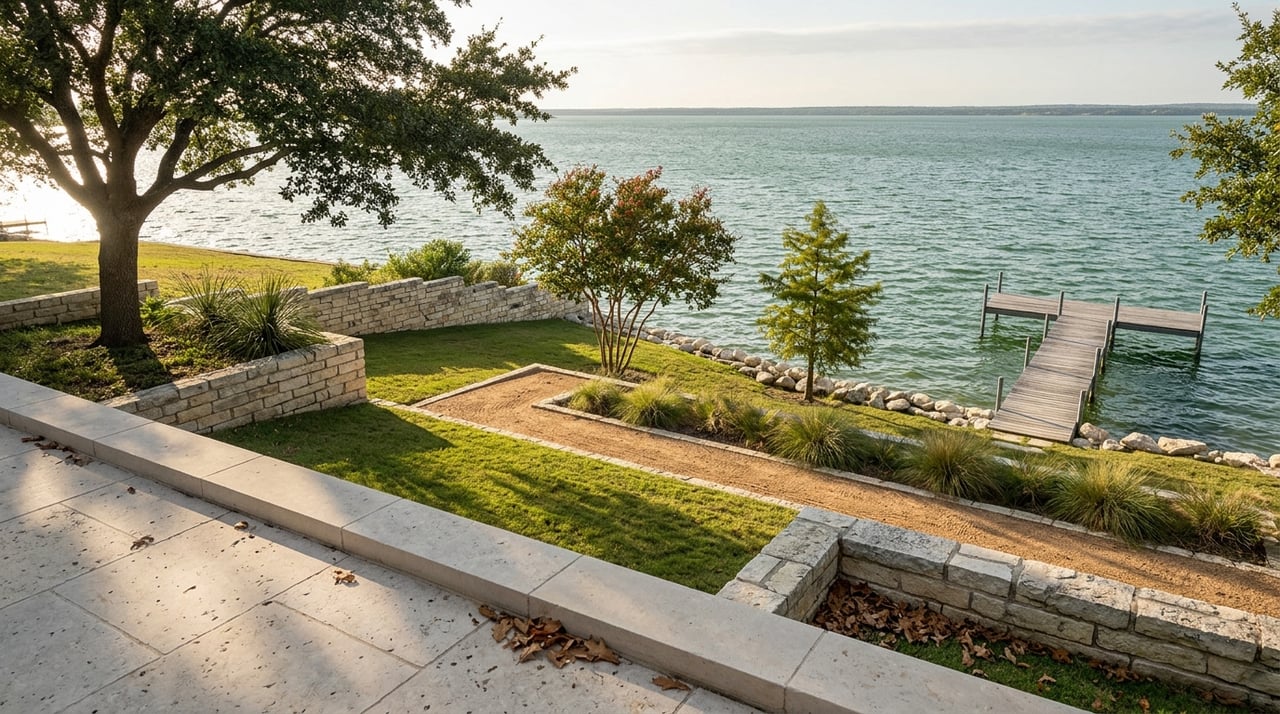
Every waterfront listing photo in Lakeway this month looks better than it has in seven years. The lake is full, the coves are open, and the dock that sat forty feet from usable water in 2022 is floating exactly where the builder promised it would. That is the story every lake-adjacent blog is running right now: come see the lake, it's finally full.
That is not the story for the person about to sign a listing agreement. For a Lakeway waterfront seller, a full Lake Travis does something less flattering than fill the frame of a photo. It hands buyers the ability to check things about your property that have been unverifiable since before some of them could legally sign a mortgage.
The Lake Has Not Been This High Since 2019
Lake Travis reached full pool, 681 feet above mean sea level, in mid-July 2026. That had not happened since 2019, roughly seven years of the lake sitting below its conservation line while sandbars stayed exposed and the low-water landmark locals call Sometimes Island stayed above the surface. When the rise came, it came fast enough that the Lower Colorado River Authority opened floodgates at Mansfield Dam and the City of Austin closed Lake Austin and Lady Bird Lake to all watercraft, including kayaks and paddleboards, for several days while the surge moved through.
As of this week, the U.S. Army Corps of Engineers gauge on Lake Travis has the reservoir sitting at roughly 679.8 feet, about 97 percent of conservation capacity. That is a few tenths of a foot below the July peak, but it is nowhere close to the drought range Lakeway has lived with for most of the past decade.
For context on how far the lake can actually move: during the 2011 drought, the most severe single-year drought on record in Texas, Lake Travis fell to 619.57 feet by that fall, more than 61 feet below full pool. At that level, most private docks sat high and dry, public ramps were unusable or badly degraded, and buyers touring cove properties simply could not tell what they were getting.
That is the range Lakeway waterfront has swung through in the last fifteen years. A dock that looks identical in every listing photo can mean completely different things depending on where the lake happens to sit the week a buyer walks the property.
Seven Years of Low Water Hid More Than Sandbars
Here is the part that gets lost in the boating coverage. A dock built or last inspected sometime during the 2019 to 2026 stretch was, for most of that period, being evaluated at partial pool. Water depth at the dock, whether the flotation foam was still properly encased, whether the structure actually reached deep enough water to be useful in a normal year, none of it could be confirmed with the lake running well below full.
At full pool, all of that becomes checkable in a single showing. A buyer's inspector can measure actual depth at the dock instead of estimating it from a drought-era photo. They can see whether a floating dock rides level or lists to one side, a common sign of failed or waterlogged flotation. They can walk the shoreline and see exactly where the water line sits relative to any retaining wall, riprap, or landscaping the seller has done since the last time the lake was this high, which for most current owners means never.
None of this is a defect on its own. It is simply new information, surfacing for the first time in a property's ownership history, right as that property goes on the market.
The Permit Question That Surfaces During the Option Period
The Lower Colorado River Authority does not require a permit, registration, or fee for a residential dock of 1,500 square feet or less on Lake Travis, but that dock still has to meet the agency's safety standards for flotation, anchoring, lighting, and maximum distance from shore. Floating docks larger than 1,500 square feet fall under the Highland Lakes Marina Ordinance and do require a permit. LCRA estimates more than 3,700 floating docks exist across Lakes Travis and Buchanan combined, which gives some sense of how much of Lakeway's waterfront housing stock is built on structures the agency actively regulates.
The detail sellers miss most often: an LCRA dock permit is tied to the property, not automatically reissued to a new owner. When ownership changes, LCRA has to be notified, and a buyer's title or option-period review will typically ask for the permit number, the original approval letter, and any inspection or violation history. Some older, grandfathered docks carry permit conditions that do not allow the structure to be rebuilt at the same size if it is ever destroyed, a detail that only matters to a buyer the day they ask about it, and by then it is usually during the option period rather than before the listing goes live.
Before you list, gather:
- The LCRA permit number for any dock, boat lift, or swim platform on the property
- The original approval letter or, if the dock predates current rules, documentation of its grandfathered status
- Any dock inspection or maintenance records from the last five years
- Notes on whether the dock has been moved, rebuilt, or modified since the last low-water cycle
None of this requires a lawyer. It requires an afternoon and a phone call to LCRA's Water Surface Management office, and it turns a question a buyer's agent will eventually ask into a document you hand over before they think to ask it.
The Market Didn't Wait for the Lake to Fill
Here is where the full-pool story gets more interesting than a boating update. In May 2026, one industry count put active waterfront listings across Lakeway at 26, with a median list price near $749,000 and homes sitting on the market an average of 121 days. By July 2026, as the same Central Texas rain that filled the lake pushed buyers back toward the water, that same broad waterfront count had dropped to roughly nine active listings citywide.
That is not a seasonal blip. That is real inventory tightening, and it happened in the same window the lake was visibly recovering. Waterfront buyers who had been waiting out the drought years moved when the water came back, and the properties that could credibly show deep, usable water access got absorbed fast.
The rest of the Lakeway market did not move the same way. Citywide, the sale-to-list ratio has been running in the low 90s, meaning homes are typically closing several percentage points below asking. Price cuts have become common enough that a meaningful share of active listings have taken at least one reduction, and days on market for the broader market, once you move past true waterfront, have stretched compared to a year ago.
So Lakeway in late summer 2026 is really two markets running at once. Away from the water, buyers have leverage on price and timeline. On the water, especially with the lake sitting near full for the first time in seven years, well-documented properties are moving into a much thinner, more competitive pool.
Showing a Full Lake Isn't the Same as Selling One
The lifestyle case for lakefront Lakeway got a real boost this year beyond the water level. Canyon Grille at the Rough Hollow Yacht Club reopened April 14, 2026 under new owner Haythem Dawlett with a farm-to-table concept built around Gulf Coast seafood and regionally sourced ingredients. Dawlett is also a principal with Legend Communities on the broader Rough Hollow community and the upcoming Square at Lakeway.
The restaurant reopening matters for how a listing shows, not for what it discloses. A buyer touring a Rough Hollow waterfront home this fall gets a full lake, a rebuilt dining destination a few minutes away, and a neighborhood that reads as active rather than paused. The dining and neighborhood activity are legitimate selling points; the full lake is an opportunity for buyers to verify the property. It is just not a substitute for the permit file, the depth measurement, or the dock inspection report a serious buyer's agent will ask for regardless of how good the water looks in September.
What This Means If You're Listing This Fall
If you own waterfront in Lakeway and you are thinking about listing while the lake sits near full, the sequence matters. Get the LCRA documentation together first. Have the dock inspected at current water levels rather than relying on records from the drought years. Price with the two-market reality in mind: waterfront is moving fast in a thin pool, but a buyer doing real diligence will notice if your paperwork lags behind your photos.
The lake filling back up after seven years is genuinely good news for anyone who owns on it. It is just not the whole conversation. The full lake is what lets a buyer verify your property for the first time in nearly a decade, and the sellers who get ahead of that verification are the ones who close on schedule instead of renegotiating during the option period.
A Few Common Questions
Does my dock need an LCRA permit if it's small? Residential docks of 1,500 square feet or less do not require a permit, registration, or fee from LCRA, but they still have to meet the agency's safety standards for flotation, anchoring, lighting, and distance from shore. Anything larger, or any floating dock over that size, falls under the Highland Lakes Marina Ordinance and does require a permit.
Do LCRA permits transfer automatically when I sell? No. Permits are tied to the property, and LCRA needs to be notified when ownership changes. Buyers routinely request the permit number, approval letter, and inspection history during the option period, so having that documentation ready before you list avoids a delay later.
Is the lake likely to stay this full? Lake Travis is managed as a flood control and water supply reservoir, and its level responds directly to rainfall and drought conditions across the Highland Lakes watershed. It sat below full for seven straight years before this summer's rise, so treat the current level as a favorable moment for verification and showings rather than a permanent baseline.
If you are weighing whether to list a Lakeway waterfront property this fall, or you want a second set of eyes on a dock's permit history before a buyer's agent finds the gap first, Dicker Morin Group works this stretch of Lake Travis every week. Book a Consultation and let's get your documentation in order while the water is still showing you exactly what you have.
This article is general information, not legal, tax or financial advice. Consult a qualified professional about your situation.