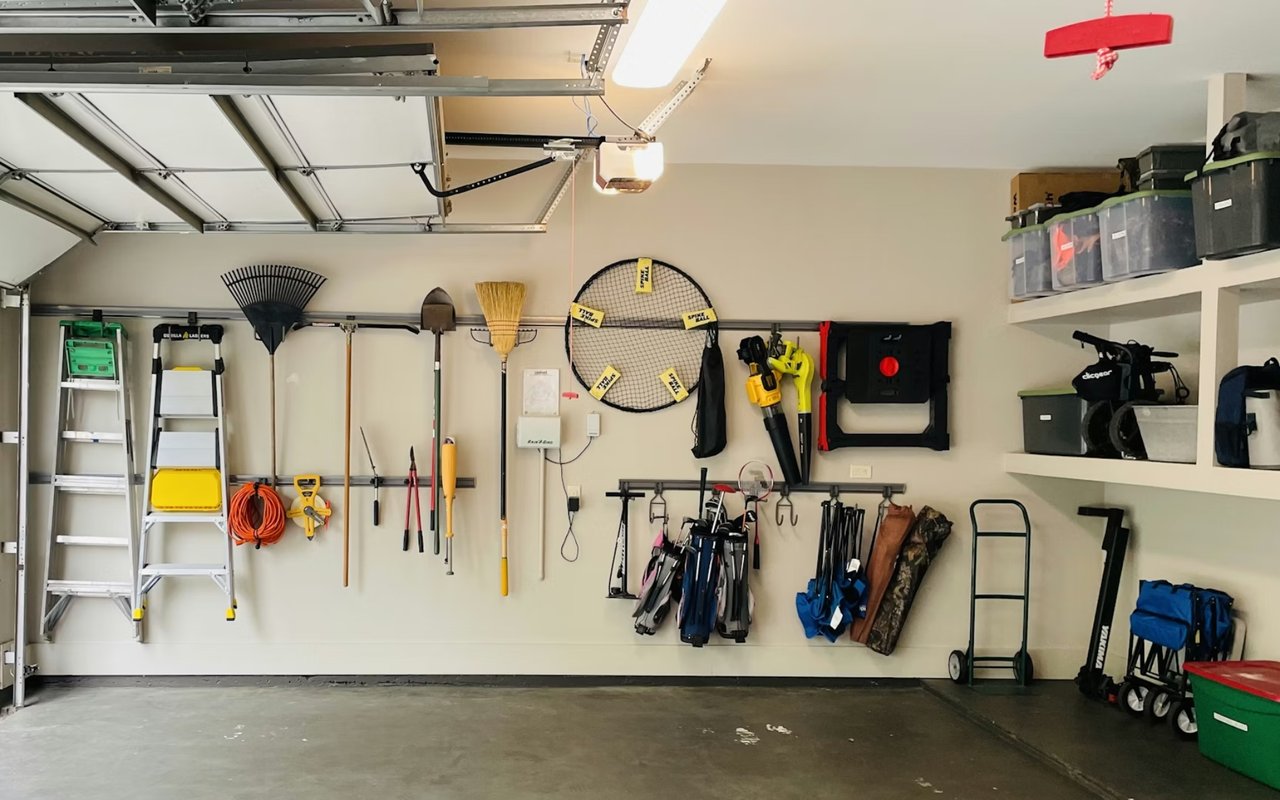
A well-organized garage does more than look tidy — it makes daily routines smoother, protects belongings from damage, and adds to a home’s overall appeal. Buyers often notice garages because they signal storage capacity, lifestyle potential, and how well a home has been maintained. With the right plan, any homeowner can organize your garage in a way that feels intentional, efficient, and easy to keep up over time.
Start With a Clear Goal (and a Realistic Timeline)
Before touching a single box, it helps to define what the garage needs to do. Some households need room for two cars, others want a workshop, a home gym corner, gear storage, or all of the above. The most successful garage setups begin with a quick vision: what should fit, what should be accessible, and what should stay out of sight. A focused goal prevents “shuffling piles” and replaces it with a functional layout that supports everyday life.
A simple approach is to plan in phases: declutter first, then clean, then build storage zones. This keeps momentum high and avoids the common trap of buying bins and shelves before knowing what actually needs to be stored.
A simple approach is to plan in phases: declutter first, then clean, then build storage zones. This keeps momentum high and avoids the common trap of buying bins and shelves before knowing what actually needs to be stored.
Declutter Like a Contractor: Fast Decisions, Fewer Piles
Professional organizers typically follow one rule: don’t move an item twice. Pull everything out if possible (driveway or lawn works well), then sort into four categories: keep, donate, sell, and dispose. Anything broken, expired, recalled, or unused for years likely belongs in the last two categories. Be especially strict with paint, chemicals, and old electronics — these often require specific disposal rules, but they’re also the items that create clutter fastest.
When deciding what stays, prioritize items that support current routines: tools that get used, sports equipment for active hobbies, seasonal décor that returns every year, and household maintenance basics. Decluttering is the step that makes it possible to truly organize your garage — because storage systems work best when they aren’t forced to hold unnecessary extras.
When deciding what stays, prioritize items that support current routines: tools that get used, sports equipment for active hobbies, seasonal décor that returns every year, and household maintenance basics. Decluttering is the step that makes it possible to truly organize your garage — because storage systems work best when they aren’t forced to hold unnecessary extras.
Deep Clean Before Storage Goes Back In
Once the garage is empty, it’s the ideal time to sweep, vacuum corners, and address cobwebs, grime, and any signs of moisture. A quick scrub of baseboards, a wipe-down of shelves, and a degreasing spot treatment can dramatically improve how the space feels.
This is also the right moment to check for practical issues: weather stripping around the garage door, pest gaps, exposed insulation, and any water intrusion after rain. A clean garage stays cleaner longer, and it makes every storage decision feel more deliberate.
This is also the right moment to check for practical issues: weather stripping around the garage door, pest gaps, exposed insulation, and any water intrusion after rain. A clean garage stays cleaner longer, and it makes every storage decision feel more deliberate.
Invest in the Right Containers (and Label Them Clearly)
Uniform bins create visual calm and make stacking safer. Clear bins are helpful for visibility, but opaque bins look cleaner — either works if labeling is consistent. Use large, legible labels on multiple sides, and avoid vague categories like “misc.” Instead, aim for specific labels such as “Holiday Lights,” “Soccer Gear,” or “Drill + Bits.”
A practical labeling tip: include a short list on the label (“Camping: stove, lantern, fuel, utensils”) so anyone can find items quickly. This is a small step that makes it easier to organize your garage and keep it that way.
A practical labeling tip: include a short list on the label (“Camping: stove, lantern, fuel, utensils”) so anyone can find items quickly. This is a small step that makes it easier to organize your garage and keep it that way.
Build a Drop Zone to Stop Clutter at the Source
Garages often become cluttered because they function as an overflow entryway. A simple drop zone solves that. Adding a small bench, wall hooks, and a compact shelf near the interior door creates a dedicated landing spot for everyday items. This helps prevent bags, shoes, and packages from migrating into random corners.
If space allows, a narrow cabinet or closed storage unit can hide visual clutter while still keeping essentials accessible. The goal is to reduce “temporary piles” that become permanent.
If space allows, a narrow cabinet or closed storage unit can hide visual clutter while still keeping essentials accessible. The goal is to reduce “temporary piles” that become permanent.
Create a Workshop Corner That Actually Works
Many garages include tools, but not all have a usable workspace. If a workshop is part of the plan, designate a corner with:
- A sturdy workbench
- Good lighting (task lighting plus overhead)
- Pegboard or wall storage for tools
- Drawer organizers for small hardware
- A magnetic strip for frequently used items
Keeping workshop supplies contained prevents tool creep — when equipment begins migrating into every shelf and bin. A defined workshop zone also signals strong functionality to future buyers.
Add Finishing Touches That Elevate the Space
A few upgrades can make a garage feel polished and intentionally maintained:
- Epoxy or sealed floors for durability and easy cleanup
- Bright LED lighting for visibility and a cleaner look
- A simple color system for labels (garden, tools, sports, seasonal)
- A small mat or runner near the entry door to reduce tracked-in dirt
Maintain It With a Simple, Repeatable Routine
Even the best system needs maintenance, but it doesn’t have to be complicated. A quick monthly reset — returning items to zones, breaking down boxes, and relocating seasonal gear — prevents clutter from rebuilding. Twice a year, a larger review helps remove items that are no longer used.
When homeowners organize your garage with zones, labels, and vertical storage, upkeep becomes a predictable habit rather than an overwhelming project.
When homeowners organize your garage with zones, labels, and vertical storage, upkeep becomes a predictable habit rather than an overwhelming project.
Learn More with the Dicker Morin Group
A garage that’s organized like a pro supports day-to-day life, protects valuable belongings, and enhances a home’s overall presentation. With a clear plan, practical zones, vertical storage, and consistent containers, the space becomes easy to use and easy to maintain — whether the goal is better function now or stronger market appeal later.
For homeowners considering improvements that boost livability and long-term value, professional real estate guidance can help prioritize updates that matter most. To learn how strategic home organization and smart presentation can support future goals, reach out to the Dicker Morin Group for trusted, local expertise.
For homeowners considering improvements that boost livability and long-term value, professional real estate guidance can help prioritize updates that matter most. To learn how strategic home organization and smart presentation can support future goals, reach out to the Dicker Morin Group for trusted, local expertise.